
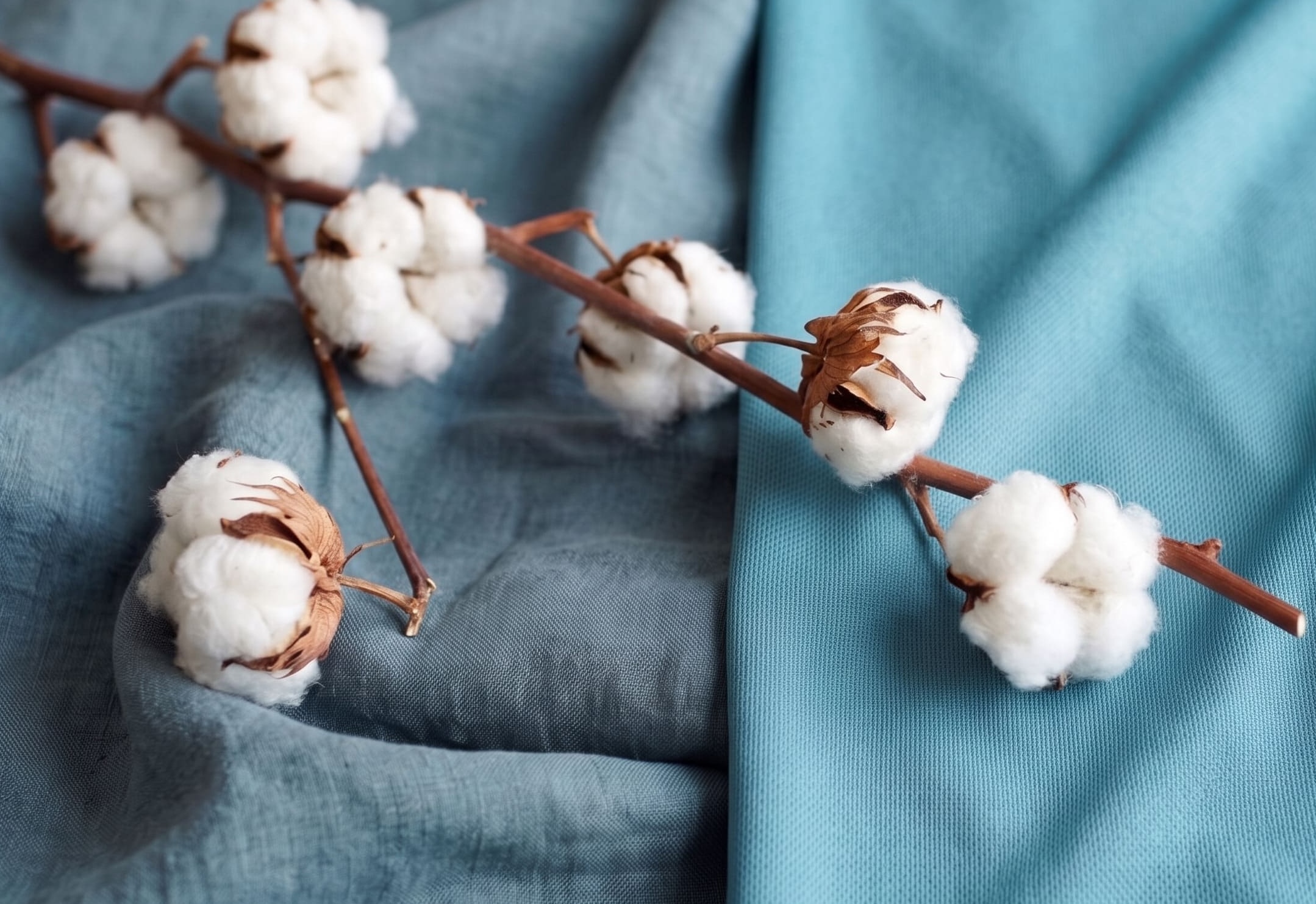
Polyester all-over print uses sublimation, which bonds dye chemically into the fiber. Colors stay vivid, prints never peel, and the fabric wicks moisture. Cotton all-over print uses a newer direct-to-fabric process; the feel is softer and more familiar, but color saturation and long-term durability are measurably lower. Which one you should use depends almost entirely on what the garment is for.
Cotton AOP is a real option now, but it is not a straight upgrade — it is a different tool. For sportswear, moisture management makes polyester the practical choice regardless of print preference.
Sublimation converts solid dye into a gas under heat and pressure, and that gas bonds directly into the polyester fiber. There is no ink layer sitting on top of the fabric.
Because the dye becomes part of the fiber itself, the print cannot peel, flake, or crack. It also survives repeated machine washing without fading at the rate that surface-applied prints do. The tradeoff is chemical: sublimation dye only bonds to polyester (and polyester-blend fabrics with a high enough synthetic content). On cotton, the dye has nothing to bond to and the color washes out quickly, which is why classic all-over print has always been a polyester category.
Direct-to-fabric printing (sometimes called digital fabric printing) applies reactive dye or pigment ink directly onto the fabric before or after cutting, using large-format inkjet-style machinery. It works on natural fibers where sublimation cannot.
Yes, and it affects both print quality and how the finished garment wears.
Lighter fabrics (130 to 190 g/m²) are used for performance shirts, polos, and tees. The lighter the fabric, the more a high-contrast design shows through to the inside, which is a minor cosmetic point but one that some customers notice.
Heavier fabrics (250 to 410 g/m²) used in fleece and heavyweight lines hold more structure around seams and stress points — relevant at shoulder seams and pocket edges, where the fabric is folded and stitched under tension.
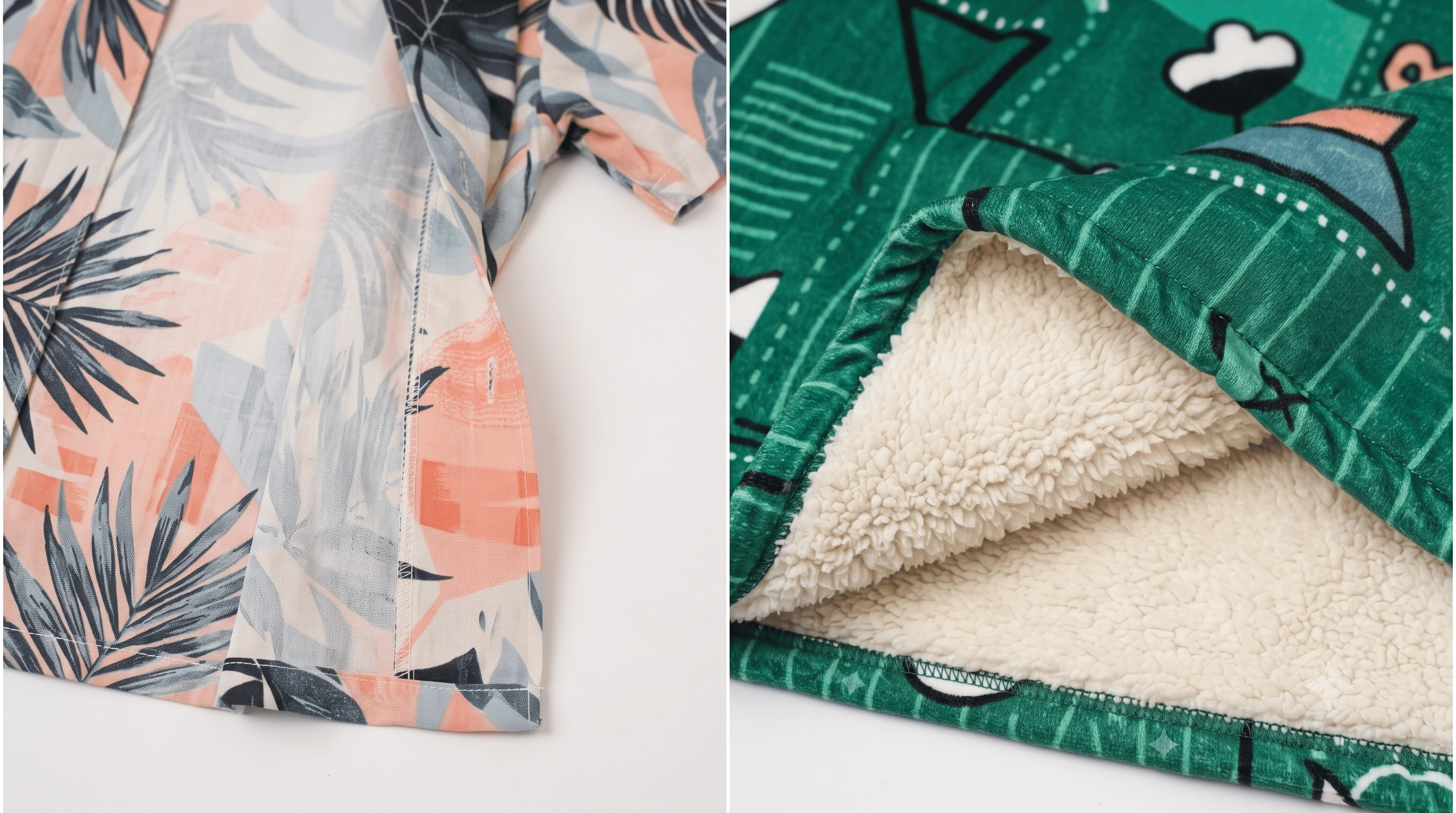
On cotton specifically, a heavier weight tends to perform better with direct-to-fabric printing because the denser weave holds dye more evenly. Very lightweight cotton can show streaking or uneven saturation, depending on the equipment and process.
Here is an honest split based on end use:
For a true cotton hand feel with all-over printing, you will get lower color punch than sublimation delivers, and you will accept some reduction in long-term print durability. That is not a reason to avoid cotton AOP — it is just the correct expectation to set. Designs with a vintage, washed, or illustrative aesthetic often look intentional at moderate saturation; photographic designs with deep blacks and gradients usually need polyester to render the way the designer intended.
If you want a cotton feel but do not need all-over coverage, placement DTG printing on a blank cotton tee is still the most predictable route. Cotton AOP exists, it is improving, but it is not yet a like-for-like replacement for sublimation in every use case.
Most of this comparison applies to printed fabric. Cut-and-sew construction is a separate consideration: the garment is assembled from individually printed fabric panels rather than printing onto a finished blank. This is how you get print coverage on every part of the garment, chest, sleeves and back, with no white border at the hem or collar.
Cut-and-sew matters for fabric choice because each panel must be printed edge to edge with bleed before it is cut and sewn. That process introduces specific production challenges — matching a pocket panel to the front panel, handling the overlap at a button placket, or scaling a design correctly across different size panels (a size S and a 4XL need different panel dimensions, so the design itself has to scale, not just stretch). These are solvable problems in software, but they are real ones. At Subliminator, which specializes in cut-and-sew all-over-print polyester apparel, we handle this in our Product creator using the Size Preview feature.
Partially. Sublimation dye only bonds to the polyester portion of a blend. On a 60/40 poly-cotton blend, roughly 40 percent of the print surface does not hold the dye, which results in a faded, washed-out appearance. For reliable sublimation results, the fabric needs to be at least 80 percent polyester; 100 percent polyester produces the best color.
Generally yes, though the gap has narrowed as direct-to-fabric equipment and reactive dye chemistry have improved. Sublimation's bond is difficult to beat for wash-fastness because the dye is inside the fiber, not on it. Cotton AOP prints treated with a fixative perform reasonably well, but over many washes the difference becomes visible, especially on saturated colors. Ask your supplier for their specific wash-fastness test data before committing to a cotton AOP product for a brand where longevity matters.
This depends on the source. Virgin polyester has a meaningful environmental footprint. Recycled polyester (rPET, made from post-consumer plastic bottles) uses significantly less energy and water than virgin production. Several AOP suppliers, including Subliminator across most of their range, use recycled polyester. Cotton has its own footprint — conventional cotton farming is water-intensive. Organic cotton reduces that, but organic cotton AOP at scale is still uncommon. Neither fabric wins cleanly on sustainability; the honest answer is to check the specific fabric composition your supplier uses.
With sublimation on polyester, the dye does penetrate through the fabric, so a mirror image of the design is faintly visible on the reverse side. This is normal and does not indicate a print problem. It is more visible on lighter-weight fabrics and high-contrast designs. On cut-and-sew garments with a lining or fleece backing, you will not see it at all.
Yes. At every seam, a small amount of the print disappears into the seam allowance. On polyester sublimation with color-matched stitching (thread matched to the dominant design color), the seam blends better than it would with a contrasting thread color. On cotton AOP, the same principle applies, though the seam allowance loss is the same regardless of fabric type. Designs with very fine details at seam lines — thin outlines, for example — risk those details being partially hidden or disrupted by the stitch.

Project Manager at Subliminator.