
Finding a clothing manufacturer willing to take on small production runs can be difficult, especially for emerging fashion brands. Many factories work with minimum order quantities that are too high for designers who are still testing products, validating demand, or building their first collections.
Small-batch manufacturers offer a more flexible alternative. They allow brands to produce smaller quantities while still accessing professional pattern making, sampling, sourcing, cut-and-sew production, finishing, and quality control.
For this comparison, we reviewed publicly available information from manufacturer websites, industry directories, production portfolios, client feedback, and other relevant sources. The four manufacturers below were selected based on their production capabilities, domestic presence, small-batch relevance, and suitability for growing fashion brands.
Best for: Emerging and established designers that need flexible, high-quality domestic production
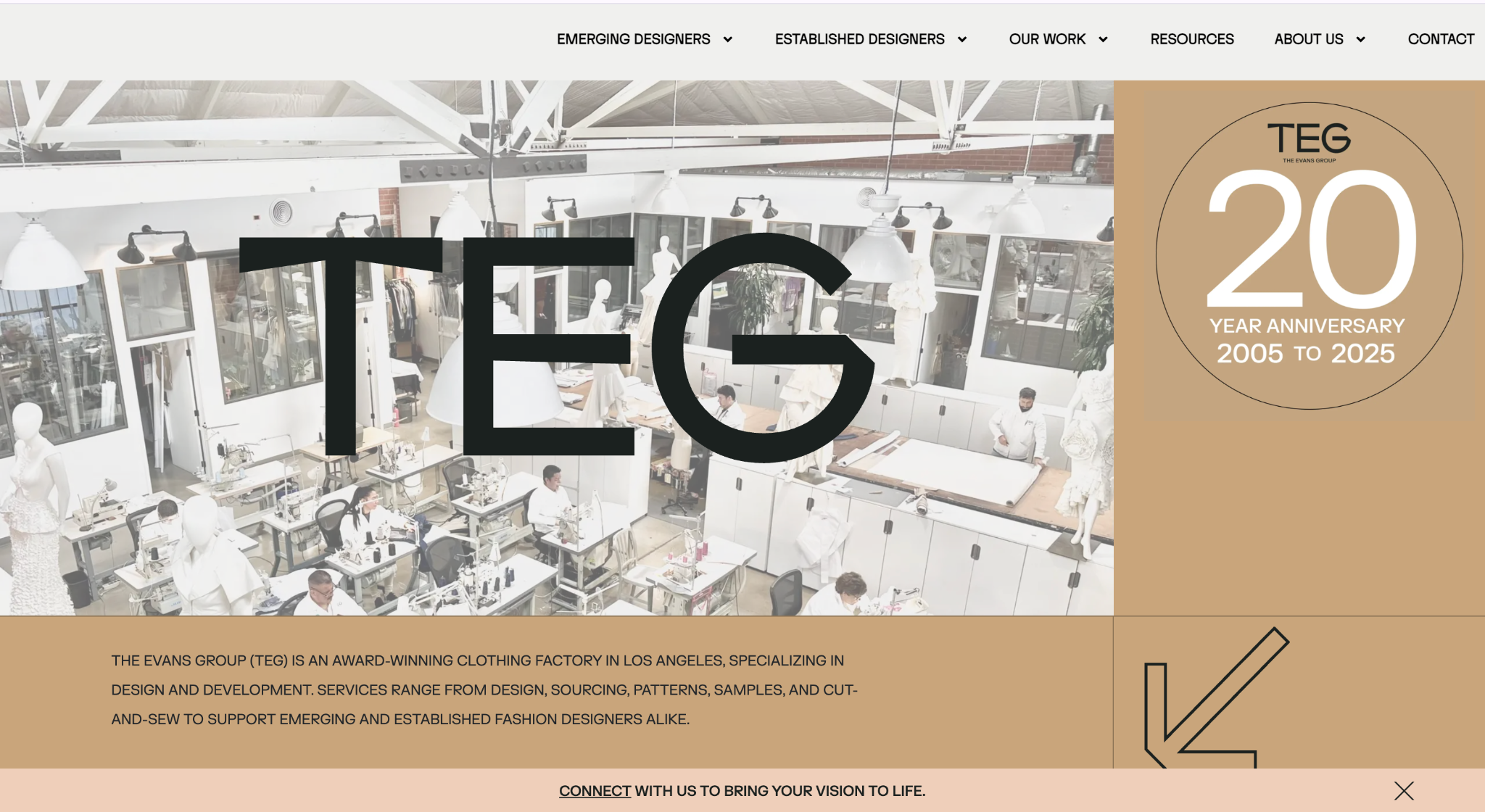
The Evans Group is a Los Angeles-based design, development, and manufacturing company that works with fashion brands from early product development through production.
Its services cover pattern making, sample development, sourcing, cut-and-sew manufacturing, and production management. One of its biggest advantages for smaller brands is its low production minimum, with manufacturing runs starting at approximately 10 pieces per style.
The company also works with more technically demanding garments and materials, including silk, leather, embellishments, detailed construction, and couture-level finishing.
Many emerging designers face the same problem: they need professional production quality but cannot commit to hundreds of units before knowing whether a design will sell.
TEG's lower production minimum gives brands more room to test collections without taking on unnecessary inventory risk.
Its production model is also particularly relevant for designers creating more complex garments that require experienced patternmakers, careful construction, and closer quality control.
The company has operated since 2005 and has worked with thousands of fashion brands. Its portfolio has also included projects associated with established names such as Nike, Rodarte, and Moncler.
TEG combines three qualities that are not always easy to find together:
That makes it particularly suitable for independent designers, premium fashion labels, and growing brands that want to remain flexible while maintaining strong production standards.
Best for: Brands looking for domestically manufactured basics and vertically integrated production
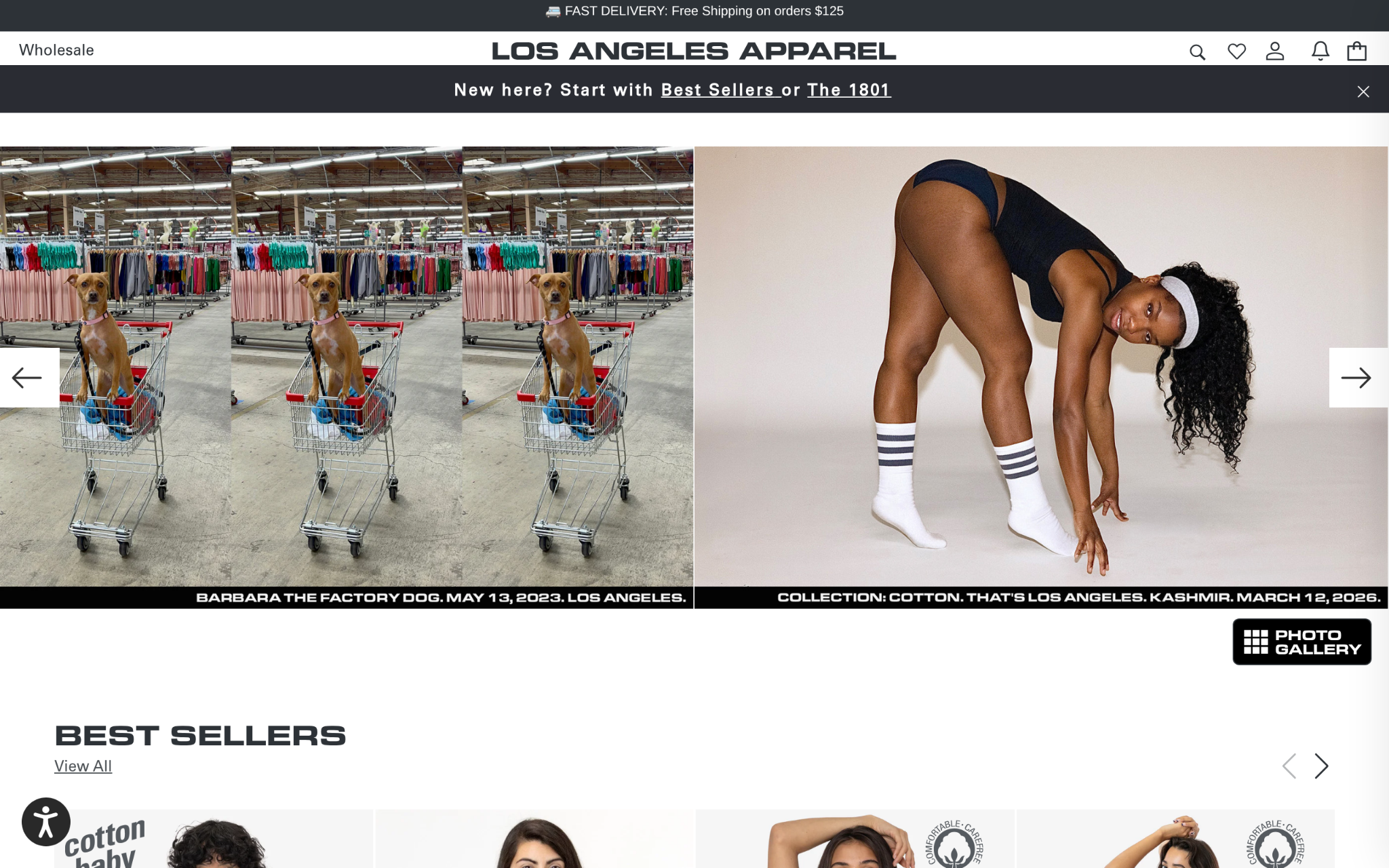
Los Angeles Apparel manufactures a wide range of clothing from its facilities in South-Central Los Angeles.
Its product categories include t-shirts, sweatshirts, activewear, swimwear, intimates, and other everyday apparel for men, women, and children.
The company operates a vertically integrated manufacturing model, meaning several stages of the production process are managed within the same broader operation rather than being distributed across multiple suppliers.
Los Angeles Apparel is particularly relevant for brands interested in domestic manufacturing at a larger operational scale.
The company has built much of its positioning around U.S.-based production and workforce standards. It employs more than 1,500 workers and publicly emphasizes employee compensation and long-term workforce retention.
For brands producing basics, casualwear, or relatively standardized garments, this type of vertically integrated setup can help support greater consistency across larger production runs.
Los Angeles Apparel is likely to be most relevant for brands that prioritize:
Brands requiring highly customized development or extremely small experimental runs should still confirm minimum quantities and production requirements directly before moving forward.
Best for: Custom apparel, decorated garments, uniforms, and larger small-batch orders
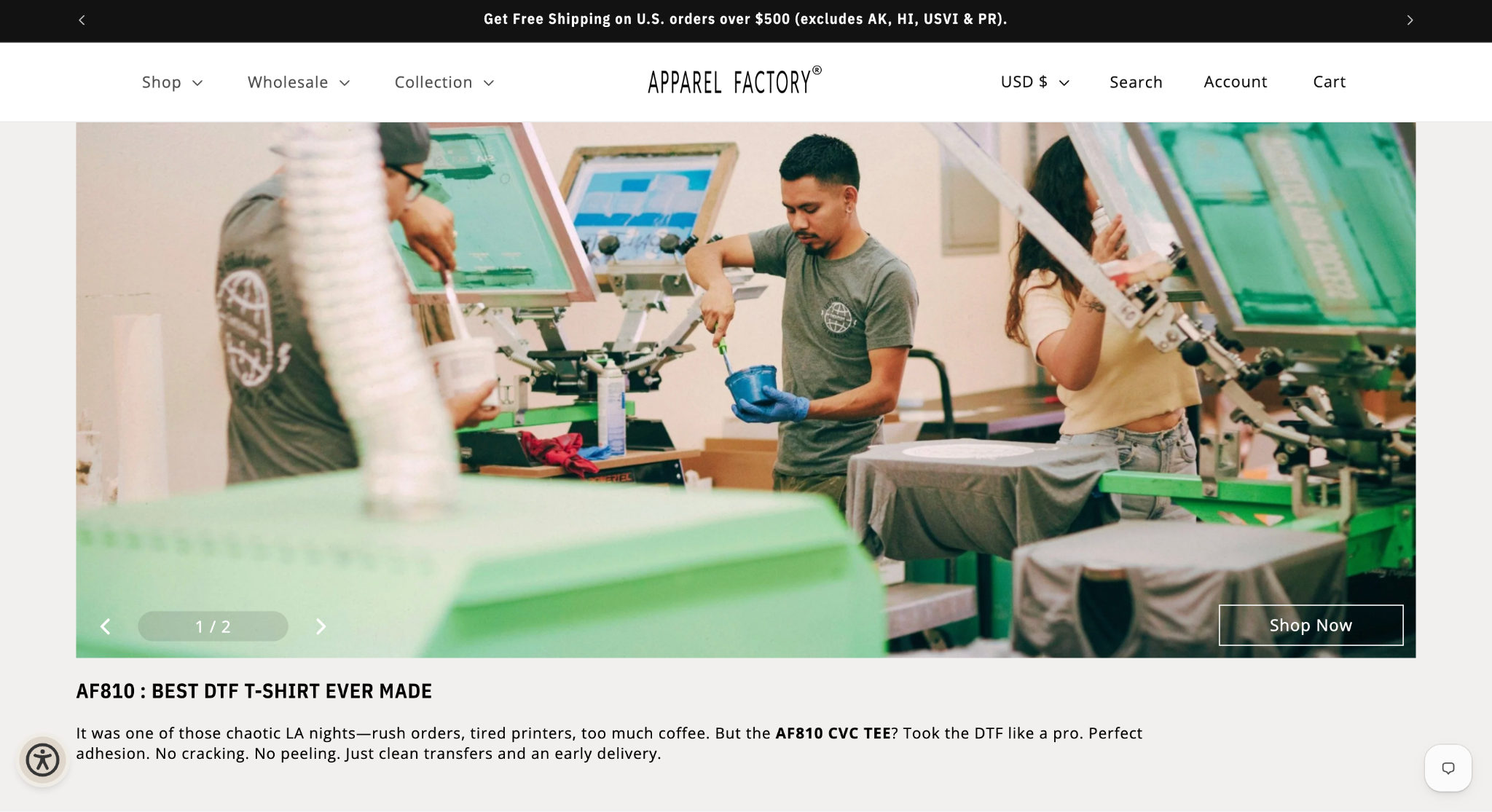
Apparel Factory is a Los Angeles-based clothing manufacturer and supplier offering services across several stages of apparel production.
Its capabilities include pattern development, fabric sourcing, cutting, printing, embroidery, sewing, and quality inspection.
The company works across categories including t-shirts, polo shirts, tank tops, sweatshirts, women's apparel, youth apparel, uniforms, and workwear.
Production generally begins at around 100 pieces, which places Apparel Factory toward the higher end of what many brands would consider small-batch manufacturing.
The main advantage is the range of services available through one supplier.
Brands that require embroidery, printing, garment production, and finishing may be able to coordinate those processes through the same company instead of managing several separate vendors.
That can be particularly useful for businesses producing:
There is less publicly available client feedback for Apparel Factory than for some of the other companies in this comparison.
Before committing to a production run, brands should therefore confirm:
Requesting a pre-production sample can also help reduce uncertainty before moving into a larger order.
Best for: Private label brands, organic clothing, and flexible domestic production
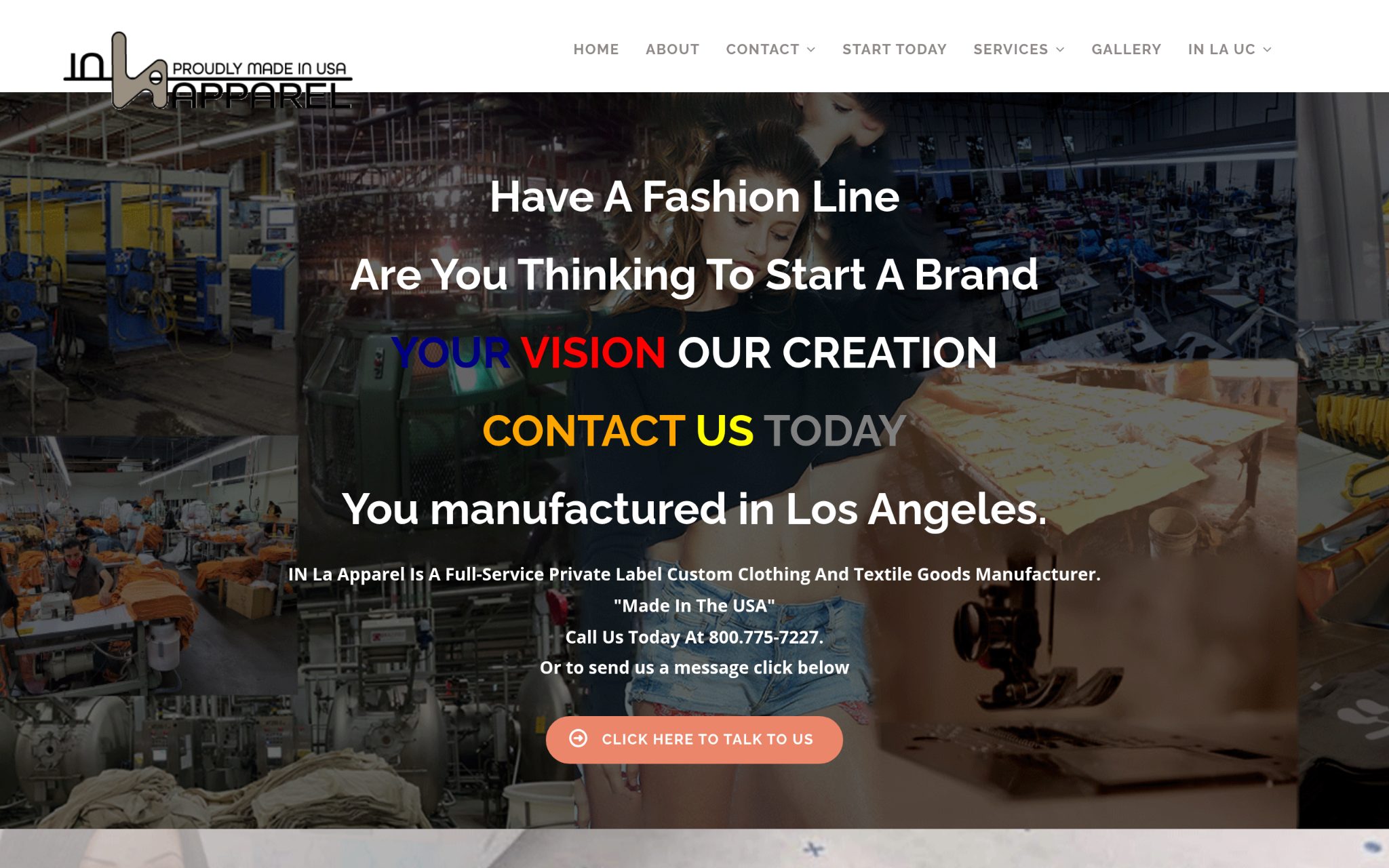
in LA Apparel provides private label clothing manufacturing across Los Angeles and Orange County.
Its services include sample development, knitting, fabric sourcing, cutting and sewing, dyeing, production, and fulfillment.
The company works with cotton, synthetic fabrics, viscose, organic textiles, and other material categories.
It also offers costume manufacturing for entertainment-related projects, which suggests experience working across a wider range of garment specifications and production requirements.
One of the company's main strengths is flexibility.
Brands looking for both product development and manufacturing can manage several production stages through the same supplier. This can be useful for emerging brands that do not already have established relationships with separate patternmakers, fabric suppliers, dye houses, sewing contractors, and fulfillment providers.
Its low-MOQ positioning also makes the company worth considering for brands that want to test new styles before scaling production.
in LA Apparel may be particularly suitable for brands looking for:
Because publicly available third-party reviews are limited, brands should request samples, confirm production timelines, and review quality expectations before placing a full order.
Large minimum order quantities create significant risk for newer brands.
If a manufacturer requires 500 units per style but a brand only needs 50, the company must either invest more capital than necessary or continue searching for another production partner.
Small-batch production allows brands to reduce that risk.
It can help designers:
Lower production quantities can come with higher per-unit costs, but the additional flexibility may be more valuable for brands that are still establishing predictable demand.
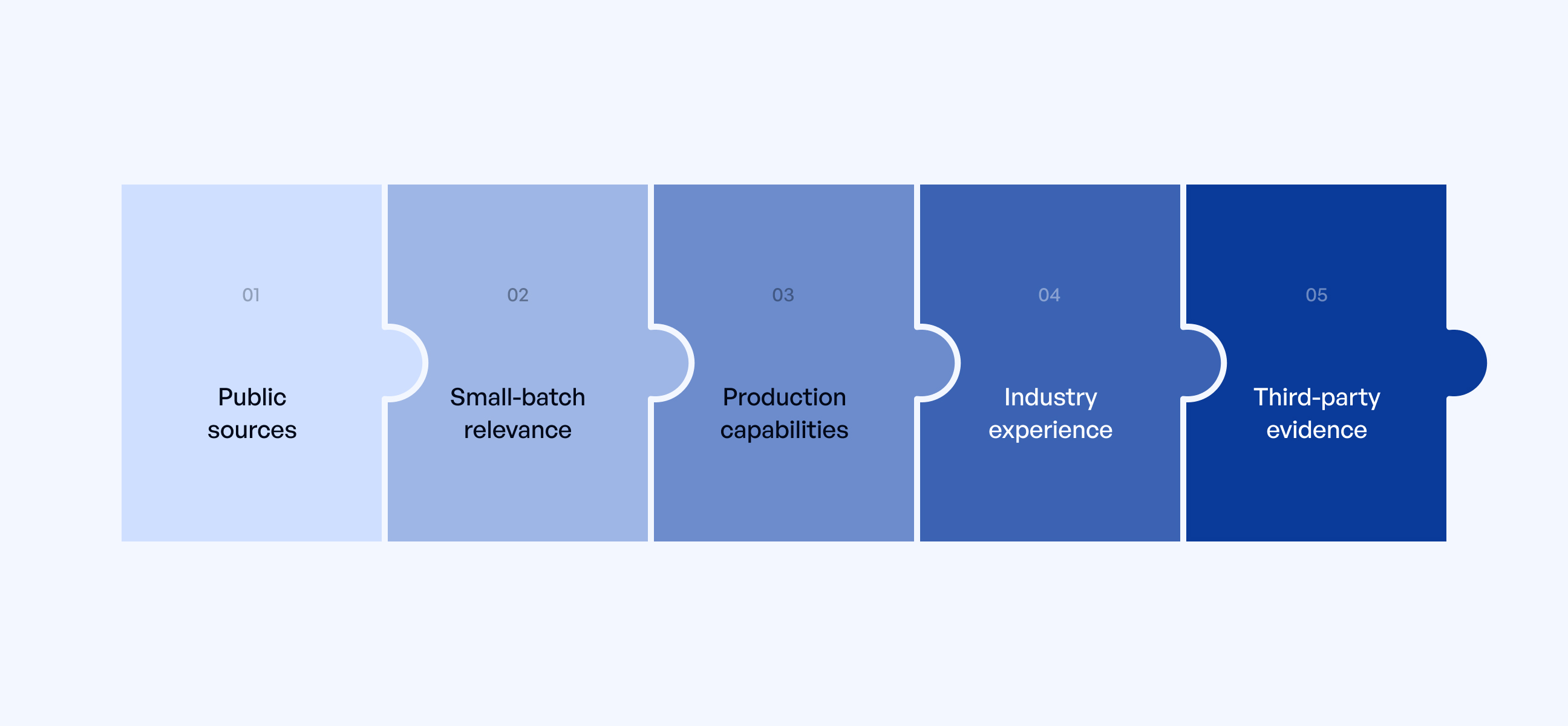
The goal of this comparison was not simply to identify large U.S. garment factories. The focus was specifically on manufacturers that could be relevant to designers and fashion brands working with smaller production quantities.
The initial research included company websites, fashion manufacturing directories, production portfolios, industry references, and publicly available client feedback.
This helped identify manufacturers with documented apparel production capabilities rather than companies operating primarily as resellers or sourcing intermediaries.
Manufacturers were then evaluated based on evidence that they work with lower production quantities.
This included publicly stated minimum order quantities, low-MOQ services, small-run manufacturing pages, and information showing that they work with emerging or independent brands.
The manufacturers were also compared according to the services they provide, including:
Companies able to support several stages of the production process were given stronger consideration because this can simplify production management for smaller brands.
Experience within fashion manufacturing was another important factor.
Longer operating histories, industry directory listings, recognizable client work, and documented production portfolios provided additional evidence of manufacturing experience.
Whenever possible, company claims were considered alongside independent sources such as industry directories, press coverage, client reviews, and other publicly available references.
Manufacturers with limited independent information were still included when their production services were relevant, but those limitations are noted within the comparison.
Choosing a manufacturer should involve more than comparing minimum order quantities.
Start by confirming the exact MOQ.
Some factories calculate their minimum per style, while others calculate it per color, size, fabric, or total order.
A stated 50-piece minimum may therefore mean something very different depending on how the manufacturer structures production.
If you only have sketches or early concepts, look for manufacturers that also provide pattern making, technical development, and sampling.
Brands with production-ready patterns and tech packs may not need the same level of development support.
Different factories specialize in different product categories.
A manufacturer experienced with basic cotton t-shirts may not be the right partner for tailored jackets, eveningwear, activewear, leather products, or heavily embellished garments.
Review previous work that closely resembles the type of product you plan to produce.
Ask how many sample rounds are typically required before production and how sample revisions are priced.
The sampling process often reveals how clearly the manufacturer communicates and how effectively it translates specifications into finished garments.
Understand when garments are inspected and what happens if production defects are found.
For small runs, even a small number of defective garments can significantly affect the percentage of sellable inventory.
Ask for separate timelines for:
This gives you a much clearer production schedule than asking only for one general turnaround estimate.
Small-batch manufacturing usually costs more per garment than large-scale manufacturing because setup costs are spread across fewer units.
Ask manufacturers for pricing at several production quantities so you can understand how costs change as your brand grows.
Brands with specific sustainability or compliance requirements should confirm whether the manufacturer can work with the standards they need.
Depending on the product, this may include materials or facilities associated with certifications such as:
Do not assume a manufacturer holds a certification simply because it offers organic, sustainable, or ethically produced materials.
The best manufacturer depends largely on the type of product you are producing and the stage of your brand.
The Evans Group is the strongest option in this comparison for designers that need very low minimums, full product development, and experience with more detailed fashion construction.
Los Angeles Apparel is better suited to brands focused on domestically manufactured basics and larger-scale production.
Apparel Factory is worth considering for businesses producing custom apparel, workwear, uniforms, printed products, or embroidered garments.
in LA Apparel may be a good match for private label brands looking for flexible domestic production, organic material options, and broader product development support.
Working with a U.S. clothing manufacturer does not necessarily mean committing to thousands of units.
Several domestic manufacturers now support smaller production quantities, giving emerging brands more control over inventory, product testing, quality, and cash flow.
The most important step is matching the manufacturer to your actual production needs. Compare minimum quantities, product specialization, development services, sampling processes, quality-control procedures, and pricing before deciding.
Among the four manufacturers reviewed here, The Evans Group stands out for brands that need particularly low production quantities combined with full-service development and high-end garment construction, while the other manufacturers offer useful alternatives depending on whether the priority is basics, decorated apparel, private label production, or larger domestic runs.

A dedicated group of creators, innovators, and customer success specialists, passionate about empowering businesses with top-quality print-on-demand solutions.
