

On-demand cut and sew production lets you order one jersey or fifty without committing to a bulk run. Each piece is cut from fabric panels printed with your full design, then sewn together — so names, numbers, sponsor logos, and colorways are part of the fabric itself, not a transfer or embroidery patch sitting on top of i
Cut and sew means the fabric is printed flat as panels, then cut to pattern and sewn into the finished garment. That is different from sublimating a finished blank, where seams, hems, and stitching interrupt the print because the fabric was already assembled.
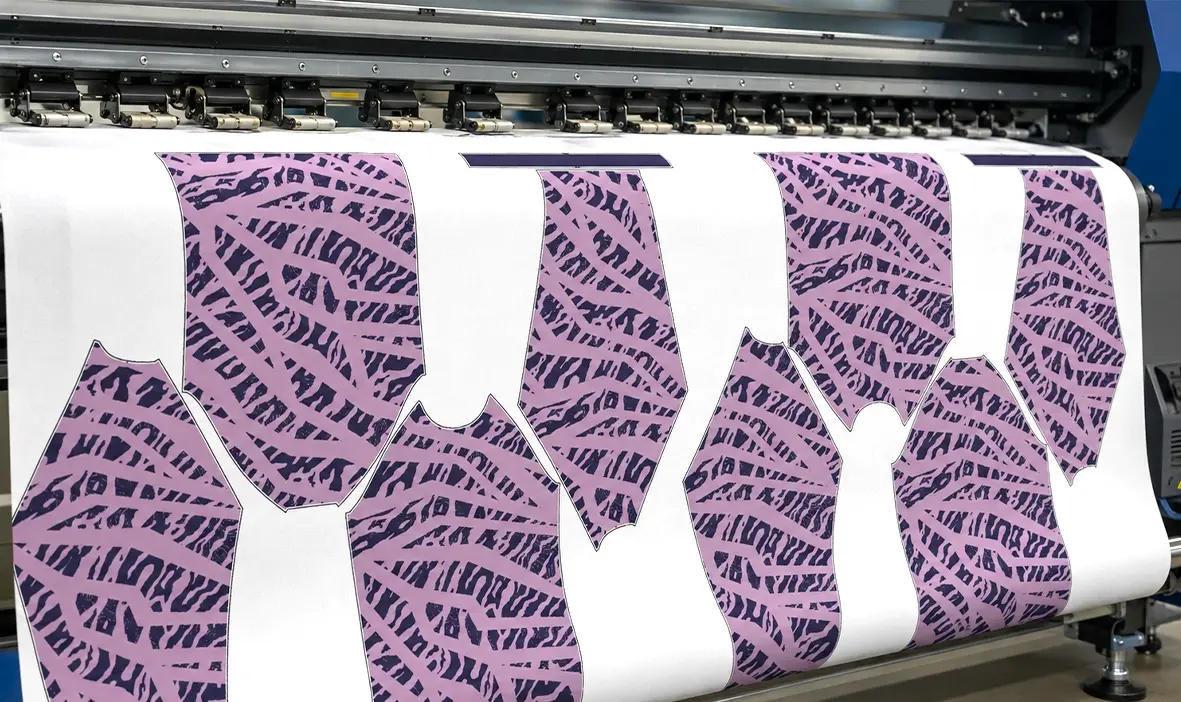
For jerseys, the practical difference is visible. When each panel is printed before assembly, a number that runs across the chest stays consistent edge to edge. Seams don't create white lines through a gradient or logo. On a baseball jersey specifically, the two front panels need to be designed so that when the shirt is buttoned closed, the print aligns.
.webp)
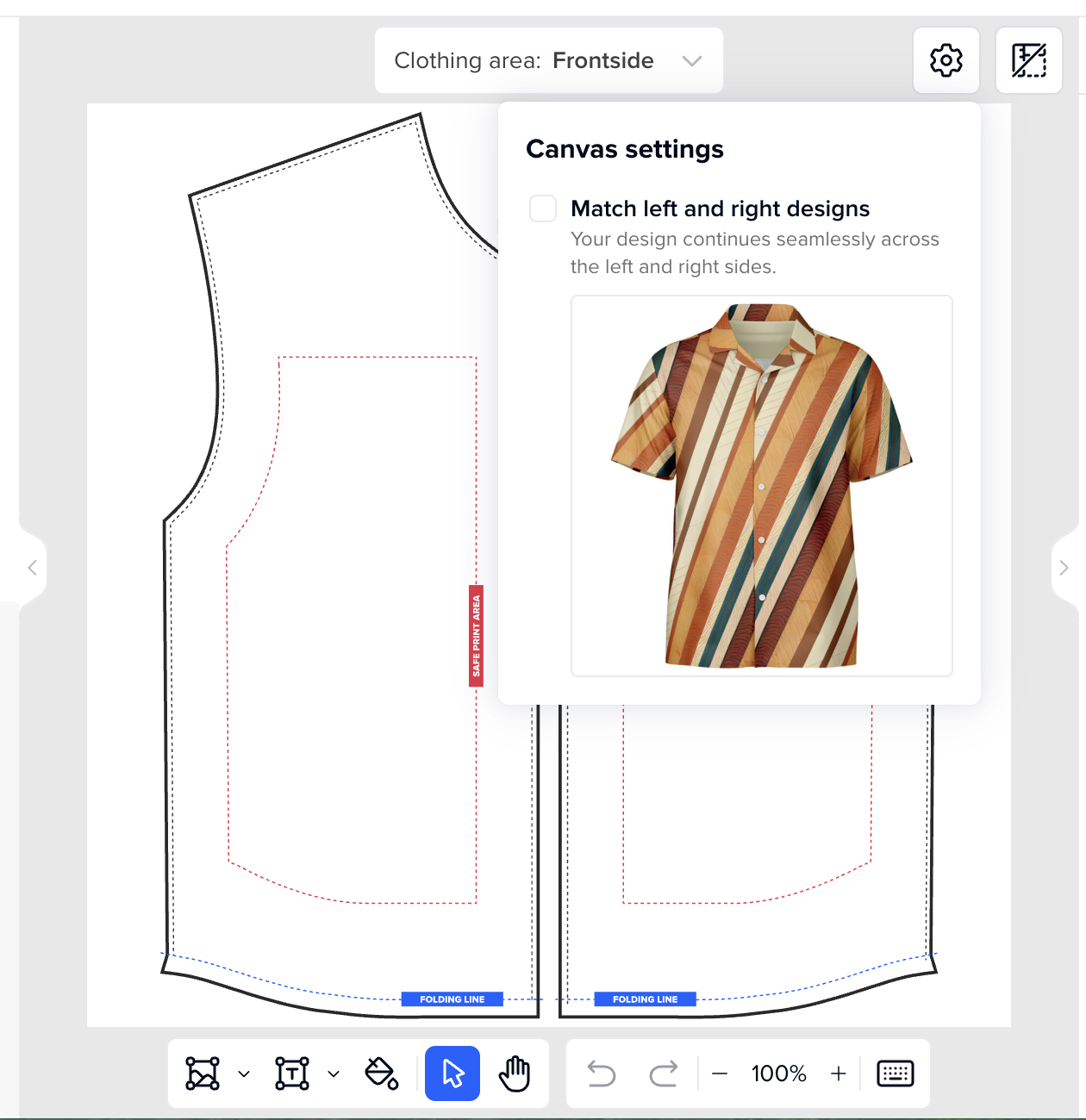
Software that handles this overlap in the design stage — rather than leaving you to discover the mismatch on a physical sample — is a real production quality checkpoint worth asking about when you compare suppliers.
In the Subliminator product creator, this option appears under the Settings icon in the top right corner of the canvas — but only when the panel is eligible for auto-merging.
Most suppliers who do all-over-print cut and sew carry several distinct jersey constructions. Here is a practical breakdown of what fits which use case.
Esports jerseys are cut and sewn the same way as athletic jerseys, which is worth stating plainly: the garment is physically identical. The difference is in how the design is used. Esports teams often need more sponsor real estate and more intricate graphic work. That actually makes cut and sew the better fit than a screen-printed placement tee, because the design has no surface area limit.
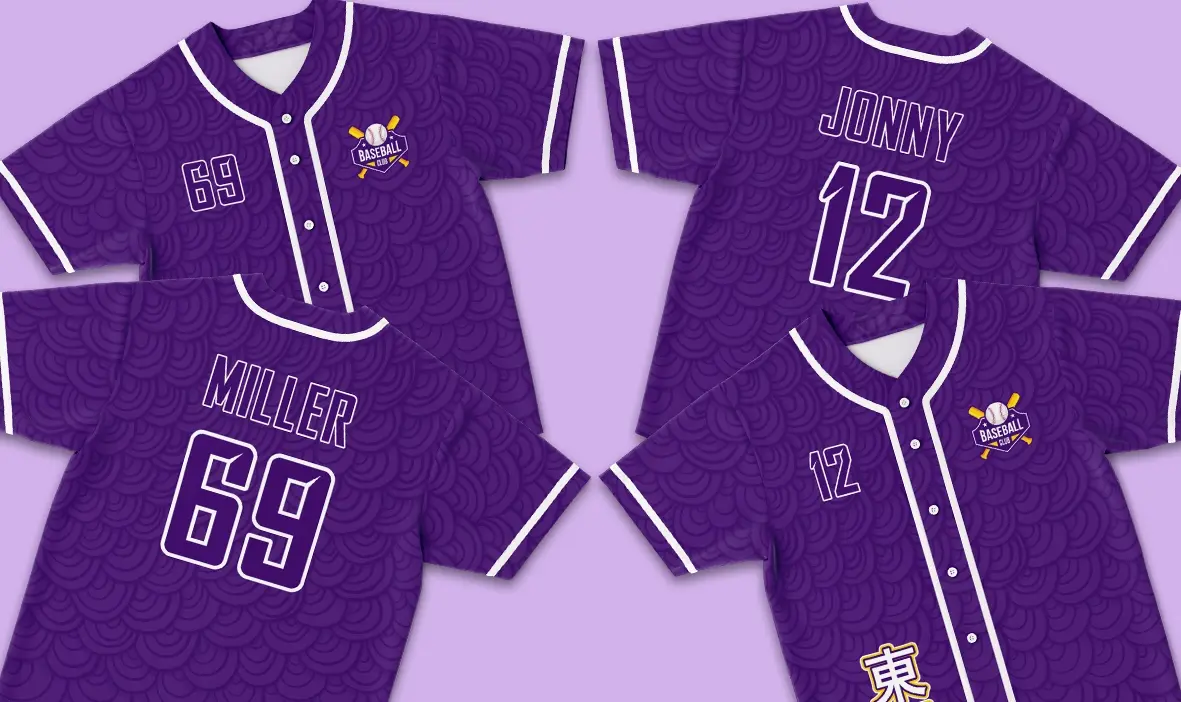
Names and numbers are part of the print file, not applied after the fact. That means the font, color, and placement you see on screen is what gets printed into the fabric. There is no cracking over time, no peeling heat-transfer vinyl, and no minimum run required to make per-player customization economical.
The honest tradeoff: because the name and number are printed rather than applied, last-minute roster changes require a new order rather than a quick relettering. For recreational leagues where rosters shift mid-season, the right approach is to build a short lead time into your schedule rather than assume you can swap a number the week before playoffs.
For esports teams where jerseys often double as merchandise, a design without player-specific names — just a team identity jersey — can be added to a public store and sold to fans without any per-order customization. Both models work; the choice depends on whether your jerseys are purely functional or also commercial.
When you are evaluating a supplier for team jerseys, a few specific details separate production that holds up from production that looks good only in photos.
Thread color matching. Standard jersey production uses white or black thread throughout. Where the seam crosses a dark section of the print, white thread reads as a visible line. Suppliers who match thread color to the dominant color of the design at each seam area produce a cleaner finished garment — the stitch effectively disappears into the print. Ask your supplier directly what their default thread practice is.
Panel alignment at closures. On a button-down baseball jersey, the two front panels are sewn separately and meet at the placket. A supplier whose design tool accounts for the overlap in software — so the design files are prepared correctly before a single piece is cut — will produce consistent alignment across an entire team order. A supplier who does not account for it will produce jerseys where the graphic shifts across the button line.
Per-size print scaling. A jersey printed for a size small and a jersey printed for a size 3XL should have the design scaled to each pattern, not the same print file stretched across both. Ask whether the supplier scales artwork per size or uses a single file across the range. The answer tells you a lot about their production setup.
Mockup fidelity. The mockup should closely represent the physical product. If your supplier's mockup is a flat PNG dropped onto a generic silhouette, you have less certainty about panel placement and color before you commit. A mockup that accounts for actual panel geometry gives you a more accurate preview of the real garment.
This is the question team organizers get wrong most often, usually by assuming jerseys work like ordering a pizza.
At Subliminator, production typically takes 4 to 5 business days. US standard delivery from production completion is typically around 9 to 12 days, putting the full door-to-door window at about 14 calendar days for most US orders. Express delivery brings that down to about 9 days total. Outside the US, EU and Australia standard delivery runs about 15 days; Canada standard about 15 days, Canada express about 9 days.
For planning purposes: if your season opener is on a fixed date, work backward at least 3 weeks for standard delivery. Build in an extra few days if any players need last-minute size changes or if you are ordering from outside the US. The worst jersey situation is not a wrong number — it is the right jerseys sitting in a facility 48 hours after game one.
One practical approach for leagues: designate a jersey deadline two weeks before the first game, order at that point, and treat any additions after that as the second wave. Because there is no minimum, a single replacement jersey for a new player is a real option rather than a workaround.
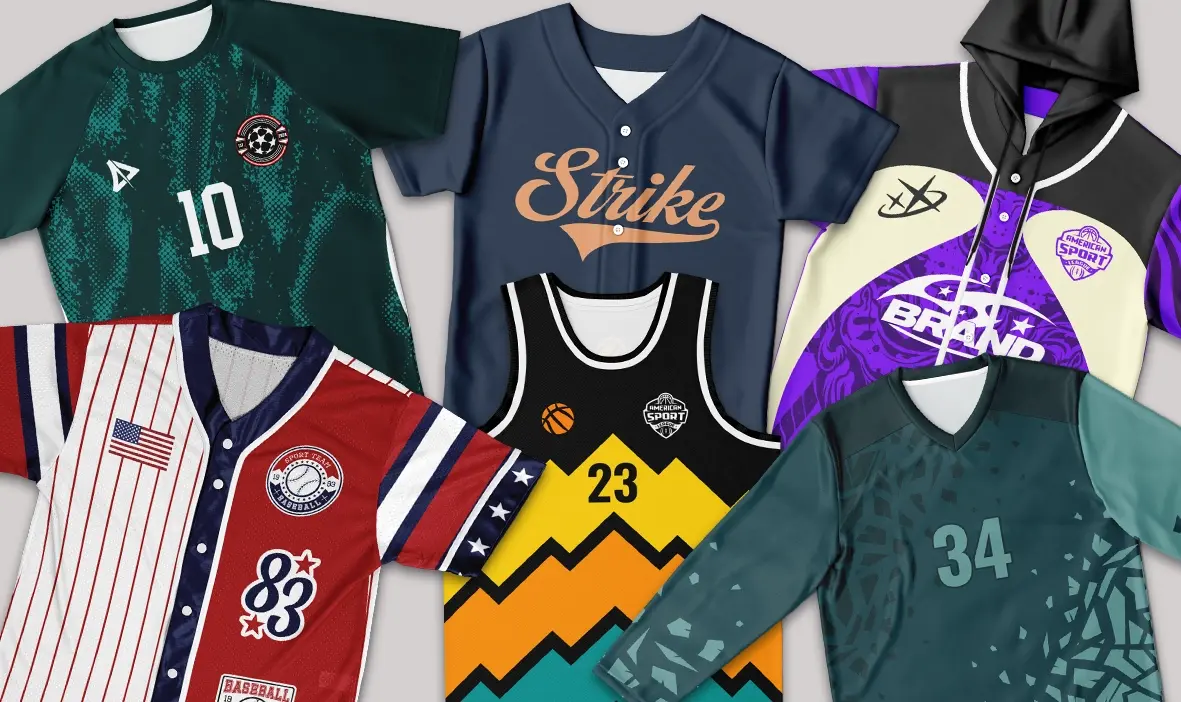
Subliminator does exclusively cut and sew all-over-print production. The catalog includes baseball jerseys, basketball jerseys, soccer jerseys, and football jerseys, among more than 150 other products. There are no minimums, so a trial order of one or two pieces to check fit and print quality before a full team run is genuinely available.
The product creator generates mockups instantly and handles the cut and sew specific design problems described above: front panel alignment on baseball jerseys and button-down shirts, and design placement relative to pockets on other styles. Production is in China. White label — no Subliminator branding reaches your customer or your players.
One honest note on cotton: sublimation printing bonds dye into polyester fibers, which is why all-over-print jerseys are polyester-based. If your team has a strong preference for a cotton-feel garment, cut and sew AOP is the wrong direction; a DTG placement print on a cotton tee would be a better fit. For jerseys specifically — athletic use, moisture management, color vibrancy — polyester is the right substrate anyway, so this tradeoff rarely matters in practice.
Yes. Because names and numbers are part of the print file rather than applied separately, each jersey is effectively its own print job. There is no surcharge for customization and no minimum quantity. You submit one file per player variant and each is produced individually.
You order a single jersey for the new player. There is no requirement to reorder the whole set. Production typically takes 4 to 5 business days, so a late addition is manageable as long as you have two to three weeks before the player needs to be on the field.
Yes. Because the entire garment surface is printable, sponsor logos, team branding, player handles, and event marks can all be positioned across the front, back, and sleeves. The design file controls placement completely.
Order a sample. Subliminator produces single pieces, so ordering one jersey in the team's primary size to check color accuracy, panel alignment, and fit is a standard step before a full run. The mockup in the product creator is designed to closely match the physical product, but a physical sample before a large team order is a reasonable precaution.
Yes. No Subliminator branding appears on the finished product. Most apparel includes a custom printed inside label, so your team's branding or your store's branding is what the player sees when they put the jersey on.

E-commerce enthusiast & founder @ Subliminator.
